How to Emulsify Pasta and Pan Sauces: Take the Pan Off the Heat
How to emulsify pasta and pan sauces: starchy pasta water, cold butter, and finely grated cheese turn into a glossy sauce when the pan is taken off the burner first.
By OnMyKitchen · 4 min read
1. Grate Cheese From a Block
Pre-shredded supermarket cheese is often coated with cellulose or starch to keep it from clumping in the bag. Those coatings can leave a sauce grainy.
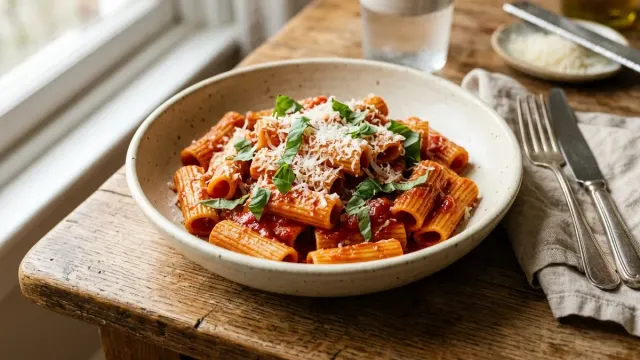
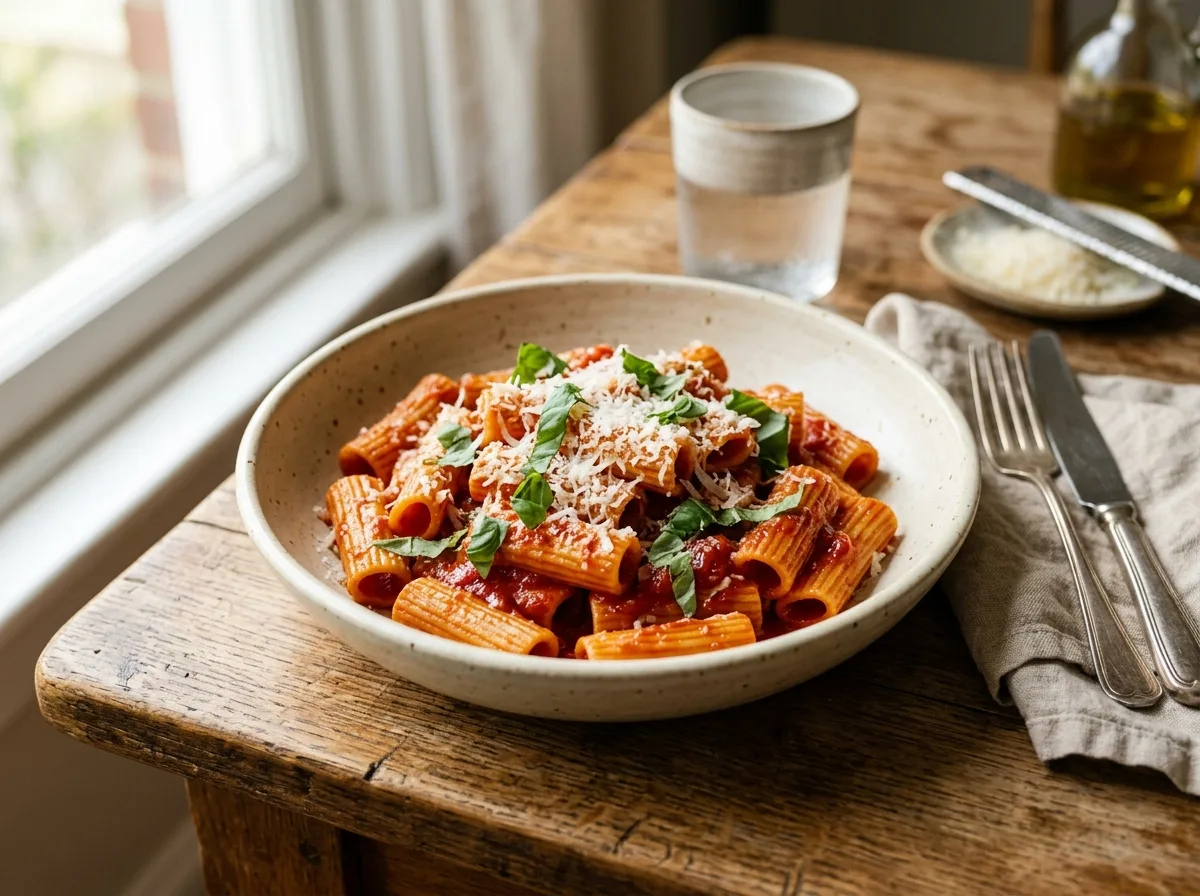
Grating a wedge of Parmigiano-Reggiano finely with a microplane or rasp produces light shreds that melt quickly into warm pasta water.
2. Use Cold Butter Off the Heat
Butter is itself an emulsion of fat and water. When it melts completely in a very hot pan, the fat can separate into an oily slick.
Adding cold cubed butter off the heat and stirring with starchy pasta water slows the melting. The starch helps hold the fat droplets in suspension, which gives a glossy sauce that coats the pasta.
Recipes That Use This Technique
Cookware Mentioned in This Guide
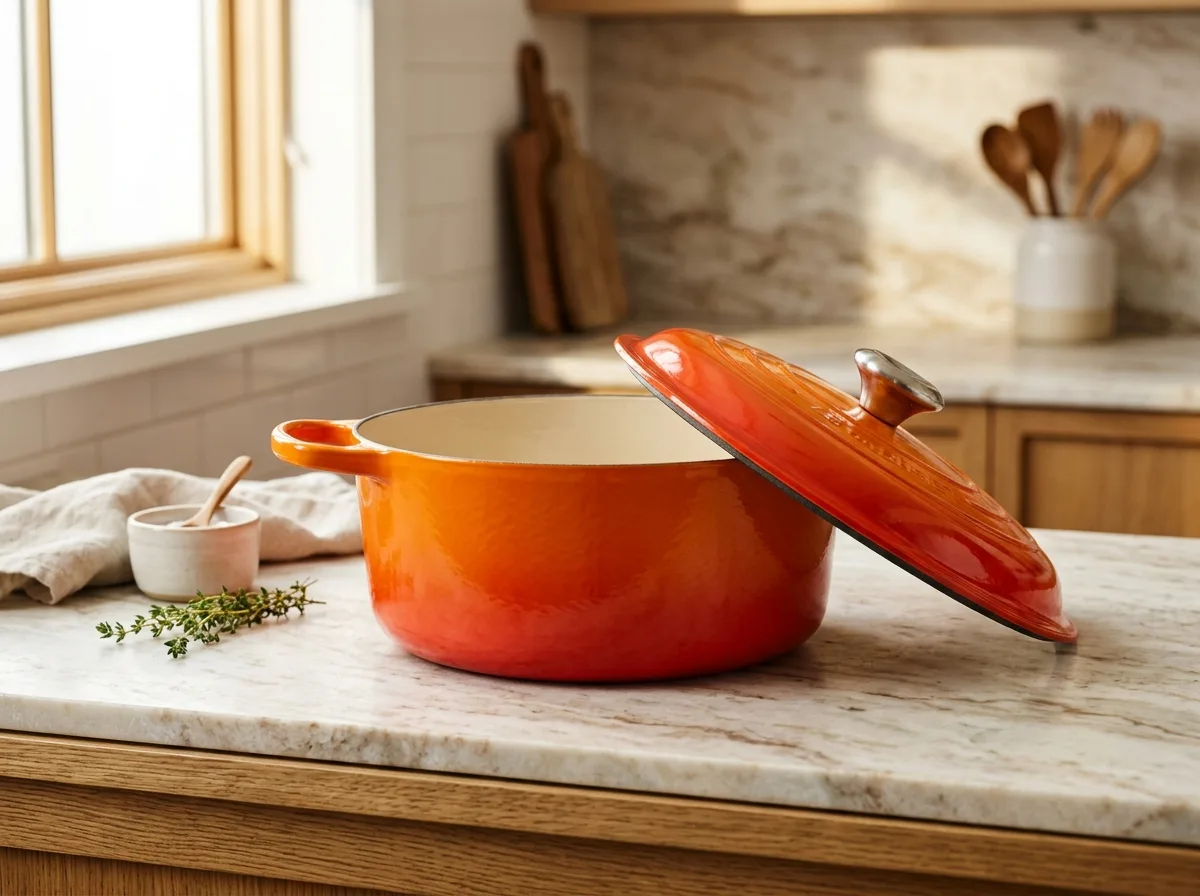
- Le Creuset Signature 5.5-Qt Dutch Oven: A 5.5-quart enameled cast-iron Dutch oven with a light sand-colored interior and wide loop handles. It suits braises, tomato sauces, soups, and covered bread baking.
- Victorinox Fibrox Pro 8-Inch Chef’s Knife: A stamped Swiss stainless chef’s knife with a textured, non-slip handle. It is a lightweight, low-cost option for everyday prep.
More Kitchen Technique Guides