Cold-Pan Cast-Iron Searing Guide: Why Starting Unheated Can Beat a Smoking-Hot Pan
A cold-pan cast-iron searing guide for fatty, skin-on cuts like chicken thighs and duck breast: starting in an unheated skillet lets the fat render before the skin burns.
By OnMyKitchen · 4 min read
1. Why a Cold Start Suits Fatty Skin
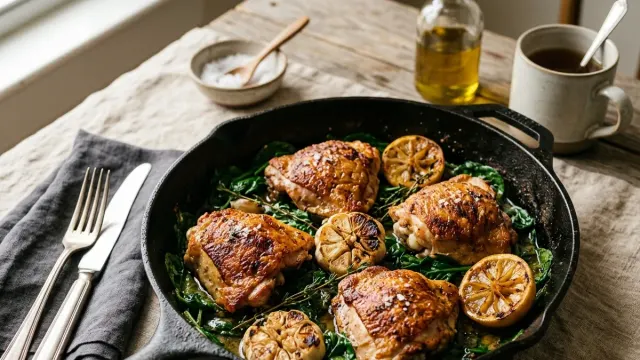
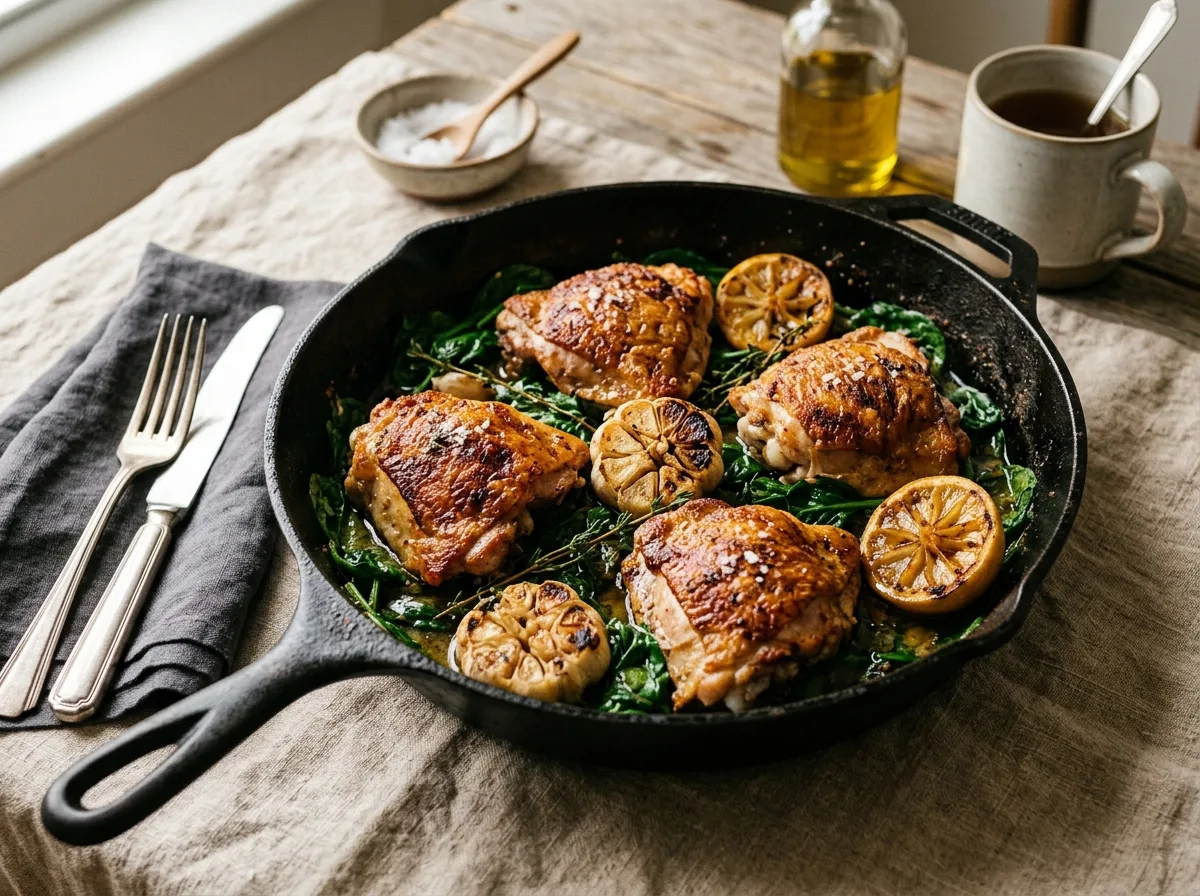
Chicken and duck skin sit over a layer of fat. In a very hot pan, the surface browns fast while the fat underneath has not melted, which can leave the skin dark on the outside and rubbery underneath.
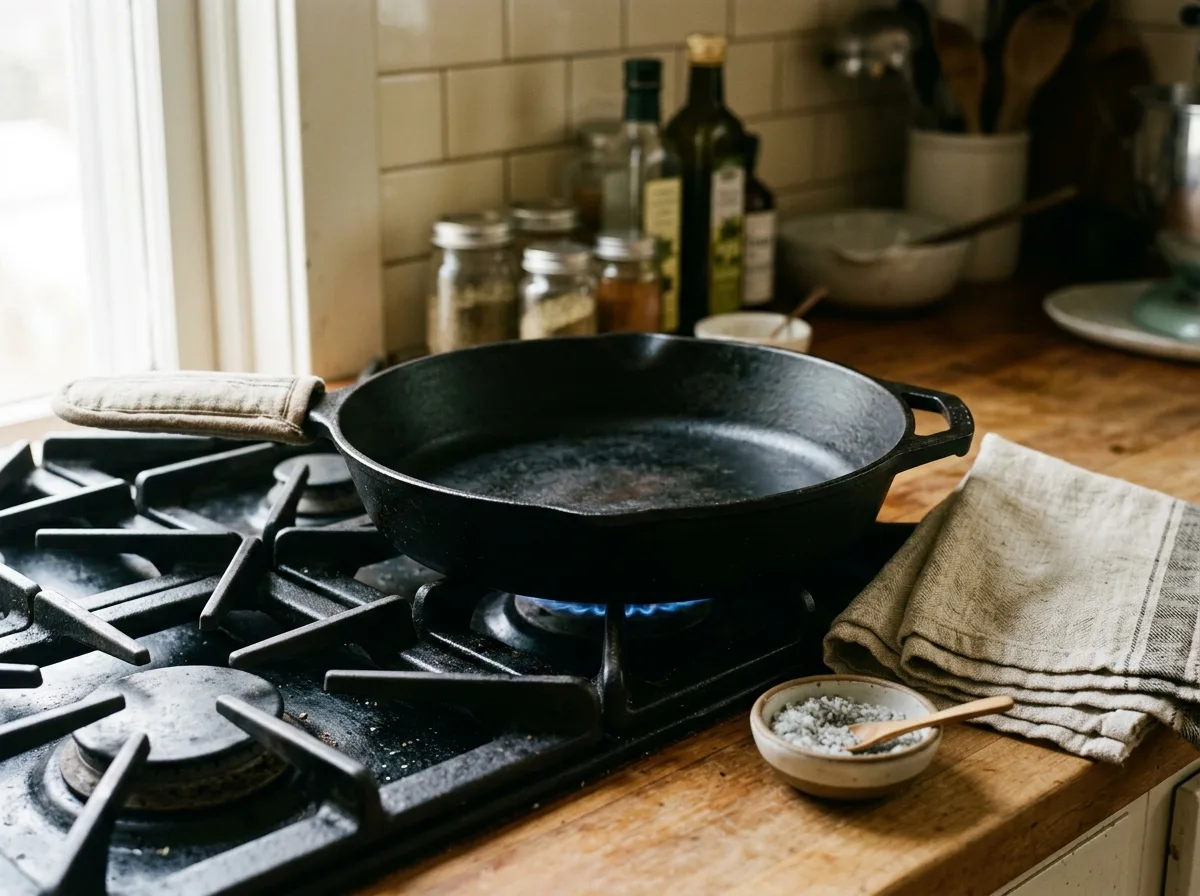
Starting in a cold pan over medium heat warms the metal and the meat together. The fat melts out slowly, water cooks off as steam, and the skin crisps in the rendered fat.
2. Pan Size Matters
Chicken releases water and fat as it cooks. When thighs touch each other in a small pan, that moisture pools underneath and the skin steams instead of browning.
A 12-inch skillet leaves room between pieces, so steam can escape and the skin can dry and brown.
3. When to Flip: The Release Test
Raw protein sticks to bare metal and releases once the surface browns. If a thigh resists when nudged early on, leave it alone, because forcing it can tear the skin.
When the skin is deep golden, a thin metal spatula slides under the edge with little resistance. Heavy cast iron heats more slowly on electric stoves, so expect to wait a few extra minutes there.
Recipes That Use This Technique
Cookware Mentioned in This Guide
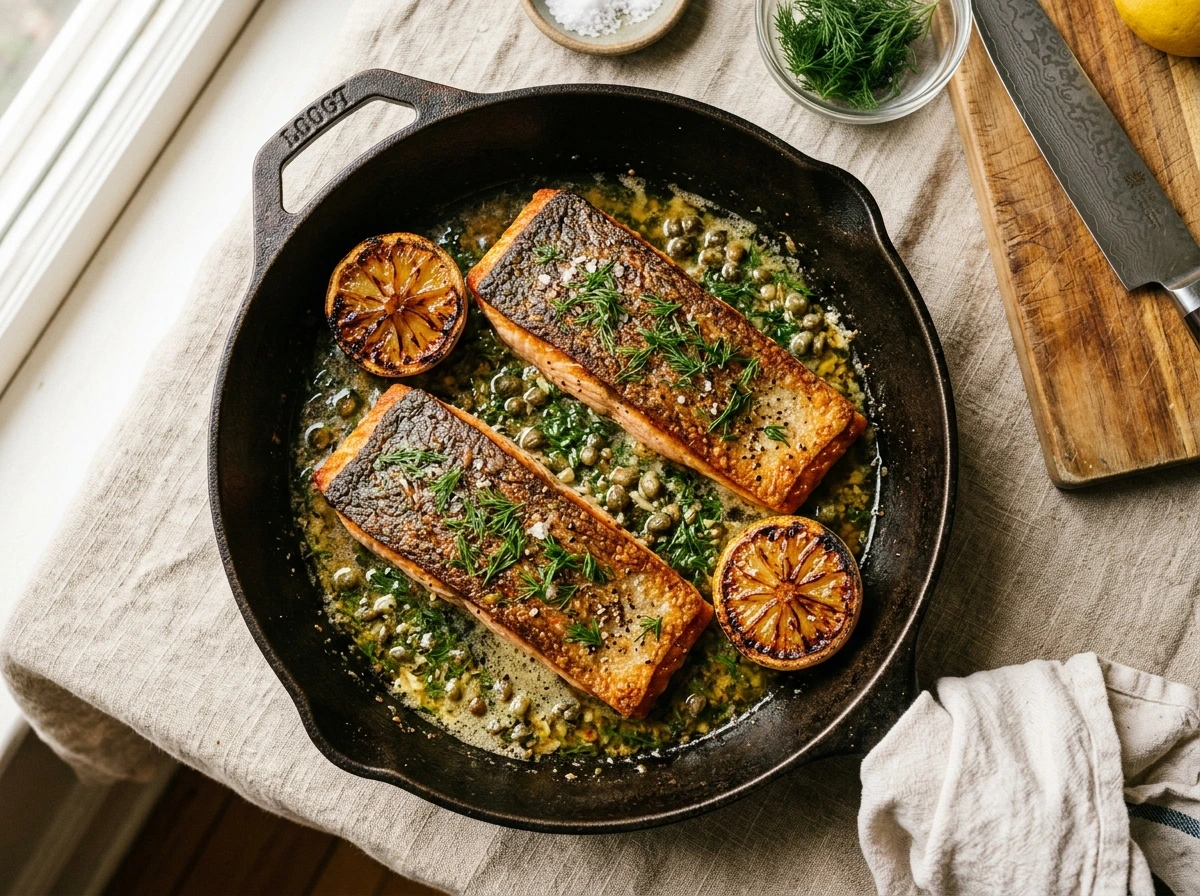
- Lodge 12-Inch Seasoned Cast-Iron Skillet: A pre-seasoned 12-inch cast-iron skillet with a helper handle. It has enough floor space to cook four bone-in chicken thighs without crowding.
- Victorinox Fibrox Pro 8-Inch Chef’s Knife: A stamped Swiss stainless chef’s knife with a textured, non-slip handle. It is a lightweight, low-cost option for everyday prep.
More Kitchen Technique Guides